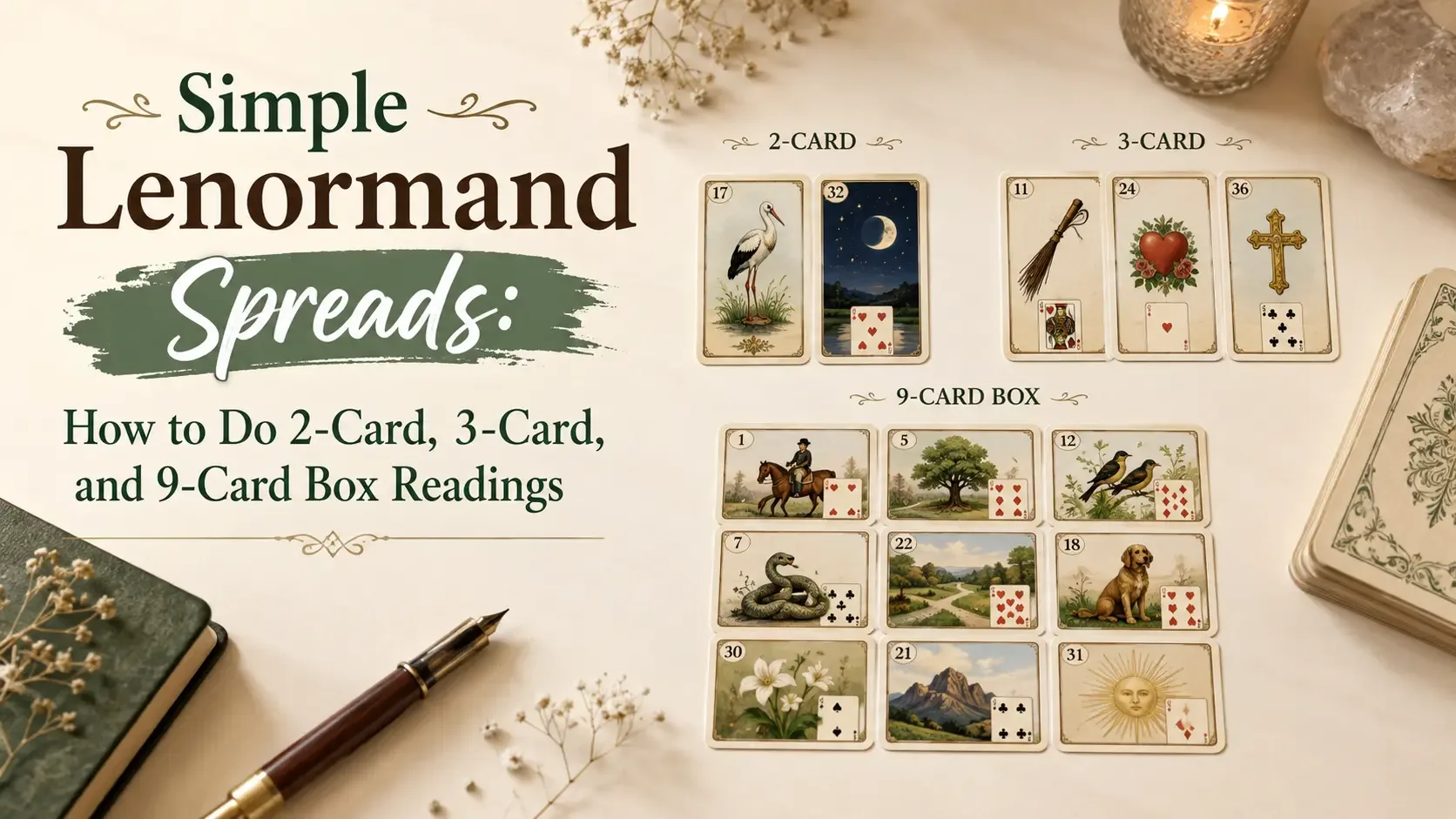
Simple Lenormand Spreads: How to Do 2-Card, 3-Card, and 9-Card Box Readings
Unlike Tarot—which leans heavily into archetypes, psychological reflection, and esoteric symbolism—Lenormand is a practical, direct system designed for…
In-depth articles on Lenormand spreads, cards, and practice
Unlike Tarot—which leans heavily into archetypes, psychological reflection, and esoteric symbolism—Lenormand is a practical, direct system designed for…
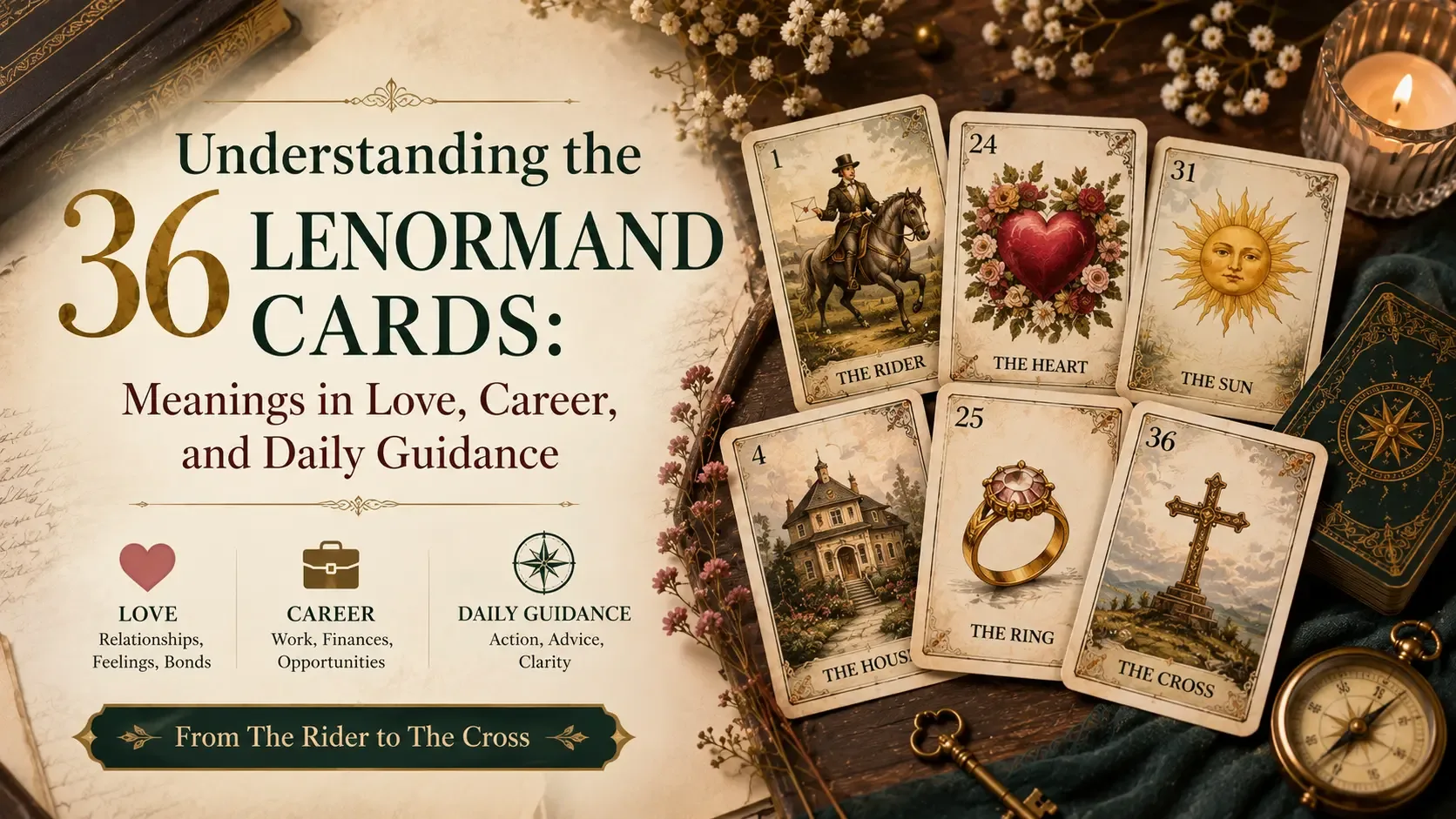
A clean, cheat-sheet guide to concrete symbols from The Rider to The Cross. Whether you’re drawing a quick Card of the Day or laying out a full Grand Tableau…
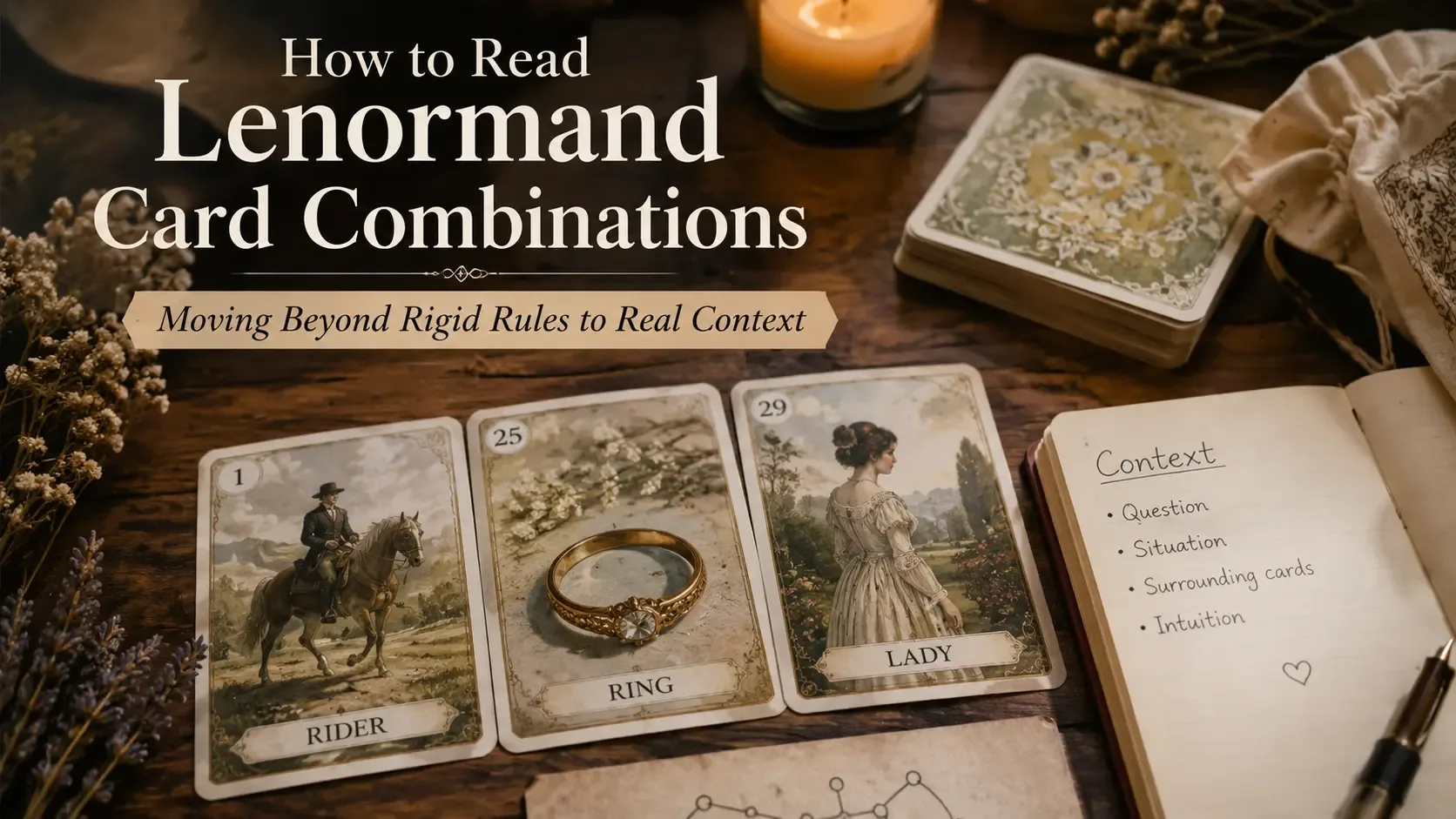
If single Lenormand cards are the building blocks of a reading, combinations are where the story actually happens. Unlike Tarot—where pulling a single card often gives you enough visual and symbolic weight for an in-depth reading—Lenormand is fundamentally a paired system. A single Lenormand card like The Clover or The Ship rarely gives a full answer on its own. It is only when two or more cards interact that clear, actionable meaning emerges. However, many beginner tutorials oversimplify combination reading by teaching a rigid formula: "Card A is always the noun, and Card B is always the adjective."
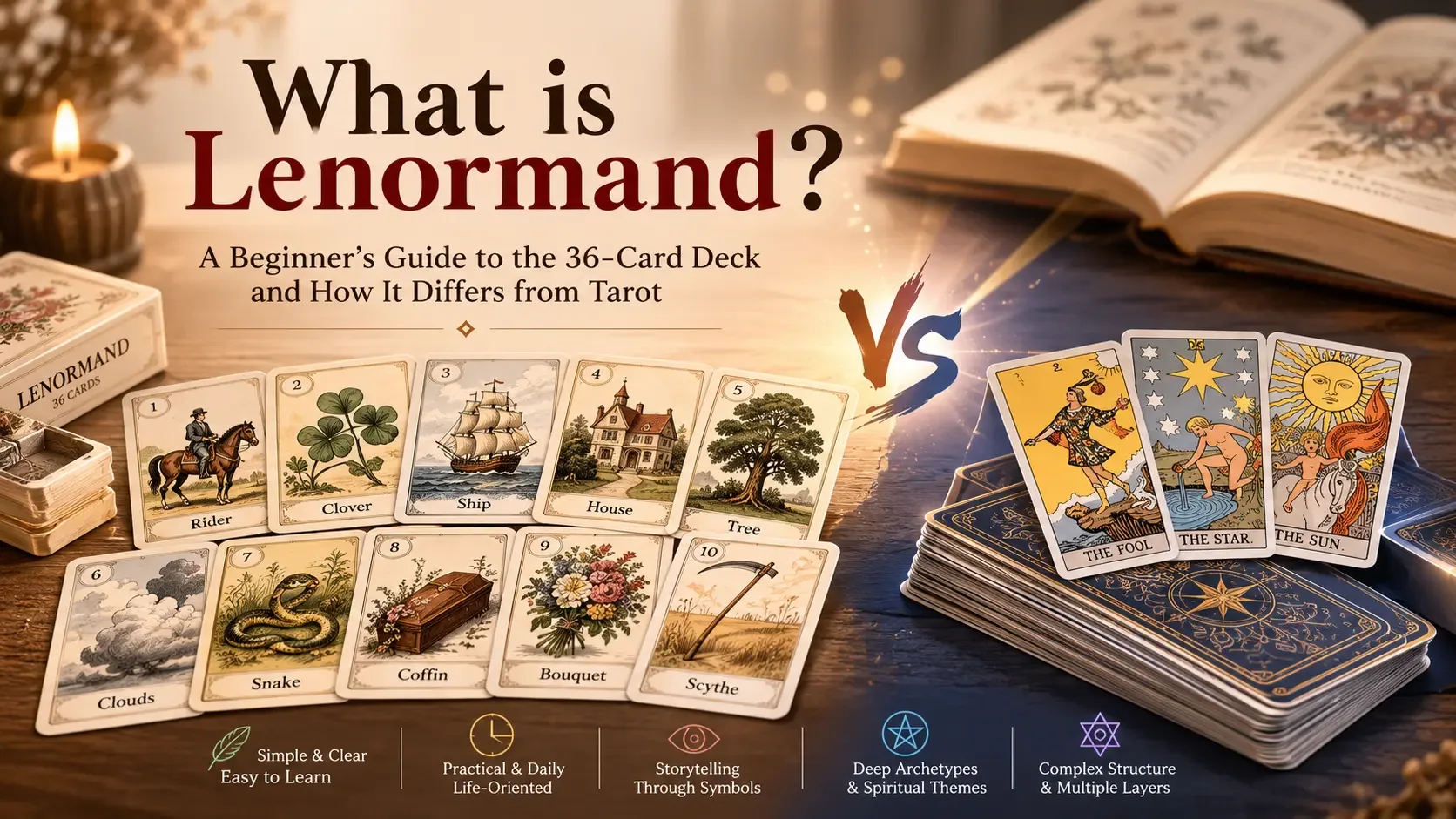
When exploring the world of intuitive card reading, most people immediately think of Tarot. However, a centuries-old European system is making a massive global comeback for readers seeking practical, direct, and real-world clarity: the Lenormand deck. If you have been looking for an intuitive tool that cuts straight through the noise without requiring years of esoteric study, understanding Lenormand is one of the best steps you can take on your cartomancy journey.